
The Ultimate Guide to Automotive Seat Upholstery: Materials, Standards & Selection
Oct. 30, 2025
Automotive seat upholstery has to do more than look good. For OEM and Tier‑1 teams, the right car seat fabric must balance durability, comfort, and compliance with stringent global standards—while supporting a low‑VOC interior. This concise guide gives engineers, designers, and distributors a practical framework to compare materials, understand the most referenced tests, and make confident selections.
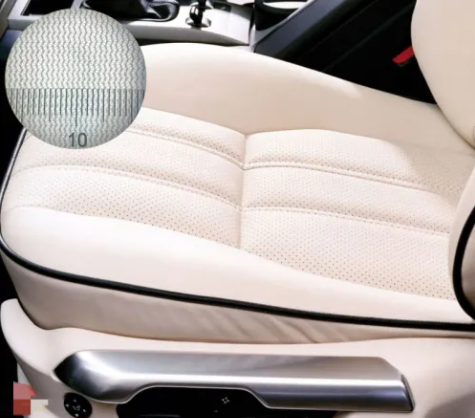
Materials overview: what actually sits between driver and seat foam
-
Leather: premium handfeel and brand signaling; good cleanability; variable breathability; needs conditioning; finishes and adhesives can influence odor/fogging.
-
PVC (vinyl): excellent cleanability and cost control; lower breathability; may squeak on rub; watch emissions depending on formulation.
-
PU (synthetic leather): softer hand than classic vinyl; tunable aesthetics; abrasion varies by construction; emissions depend on chemistry.
-
Woven/knit cloth (polyester/nylon): breathable and comfortable; can be engineered for abrasion/lightfastness; watch pilling and rub colorfastness. If you’re weighing fiber choice, see this concise comparison of nylon vs polyester for automotive upholstery.
-
Microfiber/suede: premium touch and matte optics; may need stain‑resistant finishes; check pilling/abrasion and rub fastness.
-
3D spacer fabric: exceptional air permeability for ventilated seats; good pressure distribution; verify fogging and abrasion endpoints, and pair with permeable foam/adhesives for best airflow.
Note on composites: Many seat covers are multi‑layer laminates (face + foam + scrim/backer). Those backers improve dimensional stability and stitch performance; see an example of a scrim backer used in seat composites.
Standards at a glance (what tests buyers ask for and why)
How Qicaiknitting validates materials—simple explainers for fast spec checks
Flammability — FMVSS 302 / ISO 3795
What it checks: A small flame is applied; material must not propagate fire beyond the allowed burn-rate limits.
Qicaiknitting: Our seat fabrics and common laminates (face + foam + backer) are validated to FMVSS 302/ISO 3795. Current test reports are available on request.
VOC & Interior Odor — ISO 12219 series; VDA 270 (odor), VDA 278 (VOC/FOG)
What it checks: Volatile emissions and cabin odor from non-metallic parts.
Qicaiknitting: We specify low-emission chemistries and water-borne/low-fog systems. We can provide ISO 12219 material-level data plus VDA 270 odor grades and VDA 278 chromatograms for your PPAP/RFQ.
Fogging — ISO 6452 / DIN 75201
What it checks: Condensable volatiles that can leave a film on glass (glass-plate/foil endpoints).
Qicaiknitting: Formulations are chosen to stay within fogging limits; routine lot-release tests can be shared.
Abrasion & Wear — ISO 12947 (Martindale) / ASTM D4157 (Wyzenbeek)
What it checks: Surface durability measured in cycles (Martindale) or double rubs (Wyzenbeek).
Qicaiknitting: Constructions are offered to meet your OEM/region’s method and target (fleet, retail, premium). Method and endpoint are specified on our datasheets.
Colorfastness & Light — ISO 105-B02 (xenon arc) / ISO 105-X12 (rubbing)
What it checks: Resistance to fading under light and color transfer under dry/wet rubbing.
Qicaiknitting: UV-stable yarns/finishes and dope-dyed options are available to hit required xenon grades and rubbing ratings.
Practical note: Adhesives and foams can dominate VOC/FOG in a seat-cover composite. Always test the full stack (face + foam + adhesive) to ISO 12219 material parts and VDA 278—not just the face fabric.
Selection criteria that separate a pass from a headache
-
Use case and environment
-
Fleet/sharing: prioritize cleanability and abrasion; PVC/PU and tightly woven polyester blends can excel.
-
Premium or EV: handfeel, acoustic comfort, and a low‑VOC interior; leather, high‑grade PU, or engineered knit/microfiber with low‑emission systems.
-
Hot climates/ventilated seats: breathable woven/knit or 3D spacer fabric paired with perforated foams and breathable adhesives to sustain airflow.
-
-
Compliance and validation
-
Specify flammability to FMVSS 302 or ISO 3795 as required; confirm with eCFR/ISO references above.
-
Define abrasion endpoints (cycles/double rubs) and rubbing grades appropriate to your OEM’s spec; validate lightfastness with xenon arc.
-
Set emissions targets and sampling plans; include odor panels (VDA 270) where required.
-
-
Construction and manufacturing control
-
Color management: lock master standards and lot‑to‑lot tolerances; insist on PPAP‑like documentation for sew foam and lamination steps.
-
Stitching and airbags: coordinate seat cover seams and release panels with restraint teams; certification approaches vary by OEM.
-
Composite thinking: choose scrims/backers to stabilize seams without adding squeak/rub; confirm no adverse VOC/fogging from adhesives.
-
Common pitfalls and pro tips from the lab bench
-
Don’t optimize just the face fabric: emissions and fogging often come from foam and glue. Screen full composites early with ISO 12219 material methods and VDA 278.
-
Mind xenon‑arc vs. real solar load: ISO 105‑B02 is the lab proxy; validate critical colors in field exposure when feasible.
-
Rub vs. abrasion standards differ: Martindale (Lissajous motion) and Wyzenbeek (oscillatory) are not directly interchangeable—align to your market’s norm.
-
Ventilated seats breathe as a system: pair 3D spacer fabric with open‑cell foam and permeable adhesive to retain airflow gains.
-
Camera and UX details: coarse weaves can moiré on camera and show polish on bolsters; test rub gloss and try alternate textures.
Next steps (spec, sample, verify)
If you’re preparing an RFQ or spec pack, request supplier data sheets with test methods named, recent reports for flammability, abrasion, lightfastness, VOC/odor/fogging, and a defined color QA plan. For collaborative development of breathable, durable automotive textiles aligned to low‑VOC interiors, consider engaging Qicaiknitting for a quick engineering consultation. Disclosure: Qicaiknitting is our product. Many qualified suppliers can meet these standards; the right choice depends on your performance targets, validation plan, and service model.
References (selected authoritative anchors cited above):
-
FMVSS No. 302 flammability standard — eCFR 49 CFR §571.302 (accessed 2025)
-
ISO 12219‑11 (2020) material emissions method — ISO
-
ASTM D4157 Wyzenbeek — ASTM
-
ISO 105‑B02 and ISO 105‑X12 — ISO