
How Durable is Automotive Mesh Fabric? A Guide to Long-Lasting Seat Upholstery
Jun. 08, 2026
Key points
Automotive mesh fabric can be highly durable when the yarn, knit structure, backing, finish, and test target are specified as one system. For daily-driver seating, do not judge durability by thickness alone: abrasion resistance, seam behavior, colorfastness, UV exposure, cleanability, and retained appearance matter just as much. A well-engineered polyester mesh can deliver breathable comfort and reliable service, but the correct construction depends on where it sits on the seat and how the vehicle is used.
Automotive mesh is not a single material; it is a family of engineered textiles. The visible face may be warp knitted, circular knitted, spacer knitted, or laminated to foam. Beneath that surface are decisions about filament size, yarn twist, stitch density, backing, and finish. Those decisions explain why two fabrics that look similar in a swatch can age very differently in a vehicle.
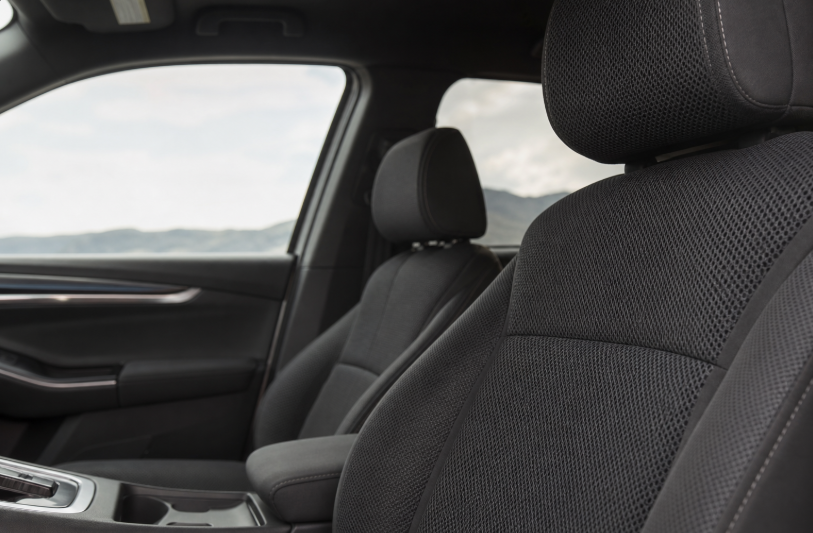
What “durable” means in a car seat
A vehicle seat must tolerate thousands of entries and exits, repeated body pressure, heat, moisture, jeans hardware, sunscreen, cleaning agents, and light. The high-risk zones are the bolster, front edge, and outer shoulder area—not necessarily the center panel. That is why a material program should define the use zone before it defines a fabric weight.
|
Performance question |
Why it matters |
Practical specification cue |
|
Will the face fuzz or wear through? |
Sliding and ingress/egress create surface abrasion. |
Set a Martindale or Taber requirement matched to the OEM program. |
|
Will the mesh bag out? |
Repeated loading can change the visible shape and comfort. |
Review stretch, recovery, and compression-set data. |
|
Will it fade? |
Sunlight and heat can change shade or weaken polymers. |
Specify lightfastness and heat-aging targets. |
|
Will it survive cleaning? |
Seats are cleaned repeatedly in real use. |
Validate the intended cleaner and stain-release finish. |
The construction has more influence than the marketing name. A tightly controlled warp knit spreads stress across multiple yarn paths and can be very stable. A 3D spacer mesh adds thickness and airflow, but needs sufficient pile yarn resilience and edge control. A simple open mesh may breathe beautifully yet need a backing or reinforced placement when it is used on a high-contact bolster.
The five factors that control service life
1. Fiber and yarn. Polyester is widely used because it offers strength, moisture resistance, color options, and good dimensional stability. High-tenacity polyester is a sensible starting point for demanding seating; nylon can bring toughness but calls for careful UV and color management. Recycled polyester can also be appropriate when it is supported by traceable content and the same performance validation as virgin material.
2. Knit geometry. Smaller, controlled apertures generally protect the yarns from snagging better than a very open construction. In a spacer fabric, the face, back, and connecting yarns must work together; a lofty look without enough structural support can flatten sooner than expected.
3. Backing and lamination. Foam lamination changes hand, appearance, and dimensional behavior. Ask for peel strength, delamination resistance, and whether the adhesive/fusion process is compatible with cabin heat. The mesh should never be treated as a separate decision from its composite.
4. Color and finishing. Dark shades can show lint; pale shades show soil; saturated shades create their own fade risk. Stain-release, antimicrobial, or water-repellent claims should be tied to a test method and post-cleaning performance, rather than treated as permanent promises.
5. Make-up quality. Even a strong fabric can fail at a poorly engineered seam. Review seam slippage, cut-edge behavior, sewing parameters, and the transition between mesh and adjacent trim.
How to read the test data without being misled
Abrasion values are useful only when the method, load, endpoint, and specimen build are stated. ISO 12947-2 describes the Martindale abrasion test; ASTM D3884 covers abrasion resistance with rotary-platform, double-head testers. Neither standard declares a universal “good” number for every vehicle, so compare results only across the same method and agreed failure criteria. For light exposure, ISO 105-B02 provides a recognized artificial-light colorfastness framework. Request the complete lab report, not just a pass/fail line on a sales sheet.
|
Evidence to request from a supplier |
What a useful report should show |
|
Abrasion report |
Method, pressure/load, cycles, visible endpoint, test laboratory, and fabric build. |
|
Colorfastness report |
Standard used, grade scale, original vs. post-exposure shade, and exposure conditions. |
|
Composite validation |
Fabric + backing + foam/lamination result if that is the supplied assembly. |
|
Lot controls |
Color tolerance, weight range, width, inspection criteria, and traceability. |
For an evidence-led program, reference the current editions of ISO 12947-2, ASTM D3884, and ISO 105-B02 in the technical file. These standards are published by ISO and ASTM International; their scope pages explain the methods and prevent the common error of comparing unlike tests. Treat them as a verification framework, not a substitute for your own seat-level validation.
Choosing the right mesh for the job
For a ventilated center panel, prioritize airflow, recovery, and a comfortable hand; a 3D spacer construction may be a strong candidate. For a side bolster, prioritize abrasion, snag resistance, and seam stability; a denser knit or a reinforced composite is often safer. For rear seating or fleet interiors, cleanability and color consistency may outweigh a luxury hand. The best fabric is the one whose construction and test plan fit the zone—not the one with the highest single lab number.
Internal-link opportunities
Use the anchor text automotive mesh fabrics to link to the automotive-fabric collection. Use sun-shade mesh fabric for cars when discussing light exposure or ventilation. Use request a material sample as the conversion link near the call to action.
Work with Qicaiknitting on a durable seating specification
At Qicaiknitting, the most productive starting point is a performance brief: seat zone, target vehicle segment, color, foam/lamination plan, required test methods, and expected production volume. We can then propose knitted mesh constructions, prepare sample yardage, and align the test plan before bulk production. That keeps “durability” measurable from the first sample to the finished seat. Contact us to discuss a custom automotive mesh fabric program.
Technical references
ISO 12947-2: Textiles—Determination of abrasion resistance of fabrics by the Martindale method
ASTM D3884: Abrasion Resistance of Textile Fabrics (Rotary Platform, Double-Head Method)
ISO 105-B02: Colour fastness to artificial light
Editorial note: Test thresholds must be agreed with the vehicle manufacturer, seat maker, and applicable market requirements. This article is a material-selection guide, not a certification claim.