
Warp Knitted Mesh vs Woven Mesh: Which Is Better?
Sep. 18, 2026
Key Takeaways
-
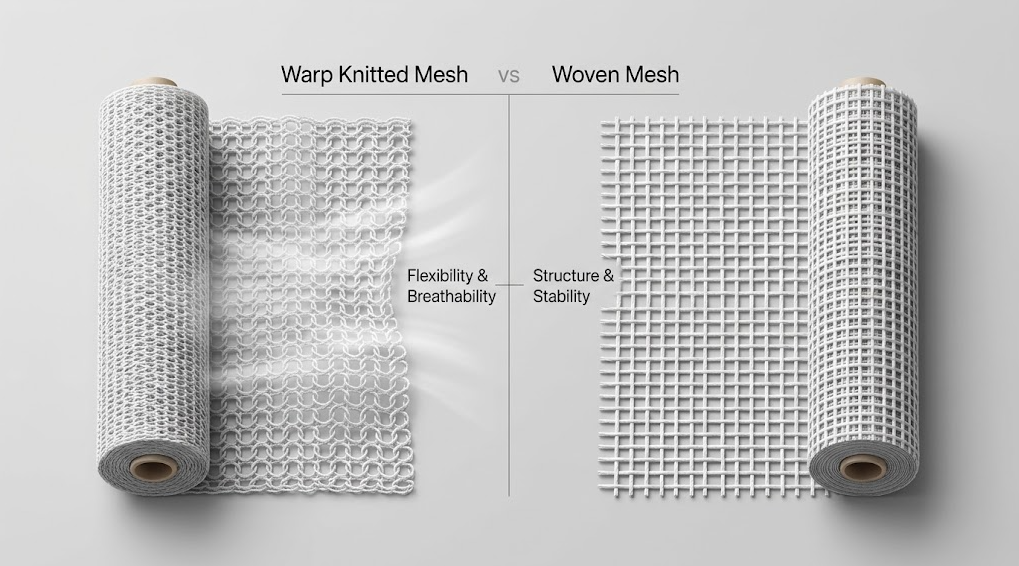
Warp knitted mesh is formed by interlocking yarns through a knitting process, giving it flexibility, stretch, and a stable open structure.
-
Woven mesh is produced by interlacing warp and weft yarns, typically providing higher dimensional stability and a more structured feel.
-
Neither construction is universally better. The right choice depends on flexibility, stretch, mesh opening, dimensional stability, airflow, durability, and the final application.
-
For apparel, sportswear, and applications requiring flexibility, warp knitted mesh can be a practical choice.
-
For applications where structure, precise openings, and dimensional stability are priorities, woven mesh may be more suitable.
-
For OEM and bulk projects, material, mesh size, GSM, width, color, and finishing requirements should be confirmed before production.
What Is Warp Knitted Mesh?
Warp knitted mesh is a type of knitted fabric made by forming loops from multiple yarns that run in the warp direction. Instead of crossing separate warp and weft yarns, the knitting process creates interconnected loops that form the mesh structure.
This construction gives warp knitted mesh a combination of flexibility, breathability, and dimensional stability. Depending on the yarn type and knitting structure, it can also provide different levels of stretch and recovery.
Polyester is commonly used for warp knitted mesh because it offers a useful balance of strength, durability, dimensional stability, and ease of customization.
Warp knitted mesh can be found in applications such as:
-
Sportswear and athletic garments
-
Breathable garment panels
-
Linings and apparel components
-
Bags and accessories
-
Window and screening applications
The exact performance depends on the yarn, knitting structure, mesh opening, GSM, finishing, and other specifications.
What Is Woven Mesh?
Woven mesh is manufactured by interlacing yarns in two directions: warp and weft. The yarns cross each other according to a defined pattern to create the mesh openings.
Because the yarns are interlaced rather than looped, woven mesh generally has a more structured construction. This can make it suitable for applications where dimensional stability, defined openings, and structural consistency are important.
Woven mesh can be manufactured from different materials, including polyester, nylon, polypropylene, and other fibers depending on the application.
Common uses include:
-
Industrial filtration and separation
-
Screening
-
Protective mesh
-
Technical textile applications
-
Outdoor products
-
Reinforcement and structural textile components
The performance of woven mesh varies considerably according to the fiber, weave pattern, yarn diameter, mesh opening, and finishing.
Warp Knitted Mesh vs Woven Mesh: Key Differences
The biggest difference is how the yarns are constructed.
Warp knitted mesh uses interconnected loops, while woven mesh uses yarns crossing over and under each other. This structural difference affects flexibility, stretch, dimensional stability, appearance, and application suitability.
| Feature | Warp Knitted Mesh | Woven Mesh |
|---|---|---|
| Construction | Interconnected knitted loops | Interlaced warp and weft yarns |
| Flexibility | Generally higher | Generally more structured |
| Stretch | Can provide stretch depending on construction | Usually limited |
| Dimensional stability | Good, depending on structure | Generally high |
| Mesh appearance | Soft and textile-like | More defined and structured |
| Airflow | Depends on mesh opening | Depends on mesh opening |
| Customization | Yarn, structure, GSM, opening, color | Yarn, weave, opening, GSM, color |
| Typical applications | Apparel, sportswear, breathable textiles | Screening, technical and industrial uses |
These are general characteristics rather than fixed rules. A specific knitted or woven mesh can perform differently depending on its material and construction.
Flexibility and Stretch
Flexibility is often one of the most important considerations when selecting mesh fabric.
Warp knitted mesh can conform more easily to curved or moving surfaces because of its knitted structure. Certain constructions can also provide stretch and recovery, making them useful for garments and products that need to move with the user or surrounding material.
Woven mesh generally has a more stable structure. While some woven constructions can have flexibility, they typically do not provide the same type of stretch associated with knitted fabrics.
For applications such as sportswear, breathable garment panels, and flexible textile components, warp knitted mesh may therefore be worth considering.
Dimensional Stability
When a mesh needs to maintain its dimensions during handling or use, dimensional stability becomes more important.
Woven mesh has a relatively structured construction because warp and weft yarns are interlaced. This can make it suitable for applications where maintaining a defined mesh opening and overall shape is important.
Warp knitted mesh can also provide good dimensional stability, but the result depends heavily on the knitting construction, yarn selection, finishing, and intended use.
For this reason, buyers should evaluate the actual fabric specification rather than choosing solely based on whether the material is knitted or woven.
Airflow and Breathability
Both knitted and woven mesh can provide excellent airflow. The key factor is usually the size and distribution of the mesh openings, rather than the manufacturing method alone.
A more open mesh allows more air to pass through, while a tighter structure can provide greater coverage and protection.
For breathable clothing, sportswear, and ventilation-related applications, buyers should consider:
-
Mesh opening size
-
Open area
-
Fabric GSM
-
Yarn type
-
Fabric thickness
-
Required level of coverage
This is why two mesh fabrics with the same material can still provide noticeably different performance.
Which Is Better for Sportswear and Apparel?
For sportswear and apparel, warp knitted mesh is often considered when the product requires a combination of breathability, flexibility, comfort, and textile drape.
It can be used in areas such as:
-
Athletic shirt panels
-
Sportswear inserts
-
Shoe and bag components
-
Breathable garment linings
-
Lightweight apparel structures
Woven mesh can also be used in apparel and accessories, particularly when a more structured appearance or stable construction is required.
The final selection should therefore be based on the garment design, required stretch, hand feel, mesh opening, weight, and durability rather than construction type alone.
Which Is Better for Window Screens?
Window screen applications require a different set of priorities.
The main factors typically include:
-
Mesh opening
-
Insect protection
-
Airflow
-
Visibility
-
Fabric strength
-
UV and weather exposure
-
Roll width and dimensional stability
For window screening, the mesh opening and density are particularly important because they affect the balance between airflow, visibility, and protection.
If you are selecting mesh for window screen rolls, understanding how mesh density and opening size affect performance can help you determine the appropriate specification before ordering.
Warp Knitted Mesh vs Woven Mesh for OEM Production
For OEM and bulk production, the construction method is only one part of the decision.
A buyer should first define the required end-use performance and then confirm the fabric specifications.
Important parameters may include:
1. Material
Specify the required fiber, such as polyester, nylon, or another material.
2. Mesh Opening
Define the approximate opening size or mesh structure required for the application.
3. GSM
Fabric weight affects coverage, hand feel, strength, and overall product performance.
4. Width
Confirm the required finished width or roll width before production.
5. Color
For customized products, provide a color reference or color standard whenever possible.
6. Functional Finishing
Depending on the application, buyers may require additional finishing or treatment for specific performance requirements.
7. Order Quantity
For bulk projects, confirm the required quantity, packaging method, delivery requirements, and production schedule in advance.
Providing these specifications makes it easier for a manufacturer to recommend a suitable mesh construction and prepare an accurate quotation.
How to Choose Between Warp Knitted Mesh and Woven Mesh
Instead of asking which construction is universally better, start with the application.
Use the following decision process:
Choose warp knitted mesh when your project prioritizes:
-
Flexibility
-
Breathability
-
Textile comfort
-
Stretch or recovery
-
Soft drape
-
Apparel or sportswear applications
Consider woven mesh when your project prioritizes:
-
Structural stability
-
Defined mesh openings
-
A more structured fabric construction
-
Screening or technical applications
-
Consistent dimensional performance
However, construction alone should not determine the purchase decision. Material, mesh opening, GSM, yarn specification, width, finishing, and application requirements can all change the final performance.
How Qicai Knitting Supports Mesh Fabric OEM & Bulk Supply
For buyers sourcing mesh fabric for OEM production or bulk orders, the most important step is matching the fabric specification with the final application.
Qicai Knitting focuses on polyester mesh fabric production and provides mesh fabric solutions for different application requirements. Depending on the project, buyers can discuss specifications such as mesh structure, mesh size, GSM, width, color, and functional requirements with the manufacturing team.
Our mesh fabric range covers applications including garment mesh, window screen mesh, anti-pollen mesh, and other customized mesh textile requirements.
For projects where the exact construction is not yet determined, it is useful to provide the intended application, required performance, target fabric weight, approximate mesh opening, width, and expected order quantity. This allows the manufacturer to evaluate the appropriate mesh structure instead of simply selecting a fabric based on the name “knitted” or “woven.”
For OEM and bulk requirements, you can explore our mesh fabric for OEM and bulk supply and contact Qicai Knitting with your specifications for a project-based recommendation.
FAQs
Is warp knitted mesh stronger than woven mesh?
Not necessarily. Strength depends on the fiber, yarn specification, fabric construction, GSM, and finishing, so the actual fabric specifications should be compared.
Is warp knitted mesh more breathable?
Both knitted and woven mesh can provide good airflow. Breathability is strongly affected by mesh opening, open area, yarn size, and fabric weight.
Is warp knitted mesh suitable for sportswear?
Yes. Its flexibility, breathability, and textile-like feel can make warp knitted mesh suitable for sportswear and breathable garment applications.
Which mesh is better for window screens?
The best choice depends on the required mesh opening, insect protection, airflow, visibility, durability, and environmental conditions. Mesh density and opening size should be evaluated before selection.
Can mesh fabric be customized for OEM orders?
Yes. Depending on the manufacturer and product, OEM mesh fabric can be customized by specifications such as material, mesh structure, GSM, width, color, and functional requirements.
Final Thoughts
Warp knitted mesh and woven mesh are different fabric constructions designed for different performance requirements. Warp knitted mesh can be advantageous where flexibility, breathability, and textile comfort are important, while woven mesh can be suitable for applications requiring a more structured and dimensionally stable construction.
For buyers, the better approach is to start with the application and required performance, then select the appropriate material, mesh opening, GSM, width, and construction.
If you are sourcing polyester mesh fabric for an OEM or bulk project, providing these specifications to the manufacturer can make material selection and quotation much more efficient. Qicai Knitting can support mesh fabric sourcing for different applications, including garment, window screen, anti-pollen, and customized mesh requirements.