Why GSM Cannot Predict Fishing Net Strength
GSM tells you how many grams one square meter of net fabric weighs. It does not tell you how much force one mesh can withstand, how far the net stretches, where it will fail or how it behaves when wet. Two fishing-net fabrics can have the same GSM but different yarns, mesh openings, knit structures and finishes, so their breaking performance can be very different. Buyers should use GSM to control mass and consistency, then verify strength with yarn, mesh and application-level tests.
GSM is a useful production-control value. It helps buyers compare fabric mass, estimate roll weight, monitor batch consistency and understand how a net may feel or handle. If a supplied roll is far outside the agreed GSM, the yarn input, mesh geometry or finishing may have changed.
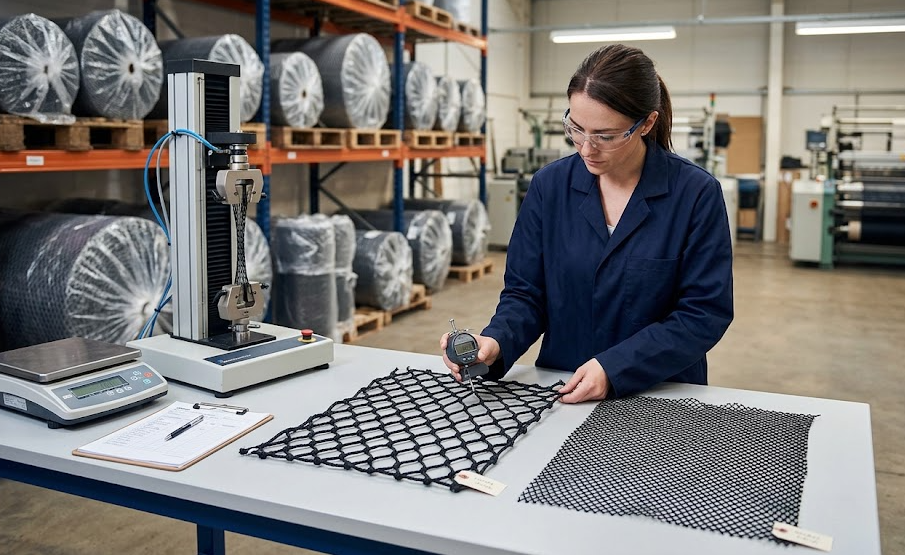
However, GSM does not reveal how that mass is distributed. A fabric can gain weight through thicker yarn, smaller openings, greater stitch density or an added finish. Each route changes performance differently. That is why the statement “150 GSM is stronger than 100 GSM” is not a reliable specification by itself.
Qicaiknitting’s hexagonal eyelet cloth for fishing net applications is offered across a product-specific GSM range, but buyers still need to confirm the construction and required test performance for their own project.
|
Variable |
What it changes |
Why GSM cannot replace it |
|
Fiber material |
Moisture response, UV behavior, flexibility and abrasion performance |
Equal mass does not make different polymers behave alike |
|
Yarn linear density |
Material in each strand and its breaking behavior |
GSM does not identify the yarn size |
|
Filament and yarn construction |
Load sharing, surface damage and flexibility |
Monofilament and multifilament yarns distribute stress differently |
|
Mesh size and shape |
Load path, opening deformation and drag |
The same mass can be arranged into many geometries |
|
Knit or knot structure |
How yarn intersections move or concentrate stress |
Failure may begin at a stitch, knot or junction |
|
Finishing |
Heat setting, coating, color and surface behavior |
Added mass may not add proportional structural strength |
The material decision should be made separately from GSM. Qicaiknitting’s fishing net material comparison explains how polyester, nylon, PE and PP differ. This article addresses the next question: how to verify the strength of a chosen construction.
Imagine two 120 GSM net fabrics. Fabric A uses a heavier yarn with larger openings. Fabric B uses a finer yarn with more stitches and smaller openings. Their mass per square meter may match, but the load carried by each strand, the number of intersections and the way the openings deform are not the same.
Now add finishing. A coating may increase measured mass but contribute little to mesh-breaking force. Conversely, a carefully engineered lower-GSM construction may place yarn more efficiently along the main load direction. Only controlled testing can show which net better matches the intended load.
This example is conceptual, not a Qicaiknitting product comparison or performance claim.
Yarn testing helps identify breaking force, elongation and the effect of a knot. ISO 1805:2006 describes testing for breaking force and knot breaking force of fishing-net yarns, including dry and wet conditions. Yarn data are useful, but they do not capture every stress concentration in a complete mesh.
ISO 1806:2002 addresses mesh-breaking force of fishing netting. The standard notes that testing can be performed dry or wet and that wet-state testing is particularly relevant to behavior in use. This is closer to the real net structure than a straight-yarn result.
A finished net includes seams, edges, attachment points and a particular hanging geometry. These areas may fail before the central mesh. The buyer should therefore test a representative assembled section under the expected direction of load.
|
Test level |
Main question |
Common limitation |
|
GSM check |
Is fabric mass consistent? |
Does not measure force or elongation |
|
Yarn breaking test |
How does the yarn fail? |
Does not represent the complete mesh |
|
Mesh-breaking test |
How much force breaks a mesh specimen? |
Still a controlled laboratory condition |
|
Prototype load test |
Does the assembled product suit the application? |
Requires a defined, repeatable test plan |
ISO references above are plain-text technical references. They do not mean a Qicaiknitting product is certified or has passed a stated requirement unless a corresponding report is available.
A hanging weight applies a relatively stable force. A moving fish, towing operation, current or repeated handling creates changing force, local impacts and multiple loading cycles. A net may survive one static pull but accumulate deformation or damage during repeated use.
For applications involving movement, buyers should define:
Do not convert a buyer’s target fish weight directly into a guaranteed fabric capacity. Product geometry and load distribution must be considered by the responsible engineer.
Instead of writing “polyester mesh, 100–150 GSM, strong enough for fishing,” provide:
Qicaiknitting’s guide to fishing net fabrics provides a broader overview of materials, structures and procurement. Use the list above when turning that selection into a testable RFQ.
Qicaiknitting supplies warp-knitted polyester hexagonal mesh with product-specific options for weight, width, color and elasticity. The right construction depends on how the mesh will be cut, assembled and loaded.
When requesting a sample, send the application, target GSM, mesh opening, width, preferred elasticity, wet or dry condition, expected load pattern and test method. If any requirement has not been validated, mark it [TO CONFIRM]. Our team can discuss an appropriate sample, but the final approval should come from your own product-level test.
Contact Qicaiknitting with your specification or reference sample to discuss a fishing-net mesh trial.
Yes. GSM directly describes mass per square meter. It may affect handling and roll weight, but it does not independently prove higher breaking force.
They answer different questions. Yarn testing characterizes the strand; mesh testing includes the net structure. Buyers may need both, followed by an assembly test.
If the product will operate wet, wet-state testing is relevant. ISO 1805 and ISO 1806 both recognize wet testing in evaluating fishing-net yarn or netting behavior.
Related products
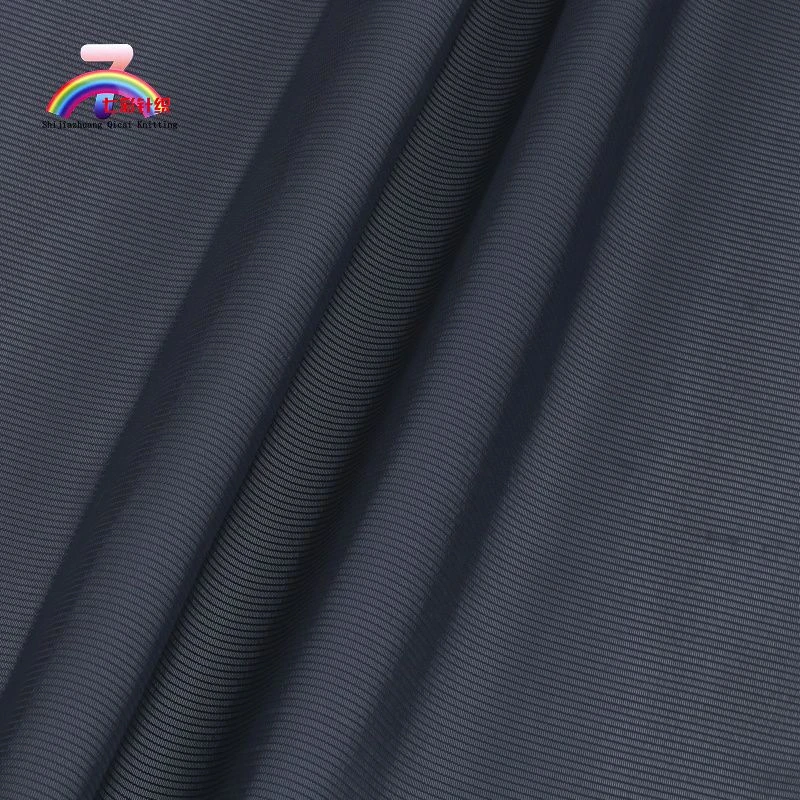
Anti-pollen Screen Mesh Fabric
Made of 100% polyester, pollen window screens are lightweight, dust-blocking window screens. the mesh is very fine and is used for window screens designed to block most airborne allergens and ultra-fine dust.
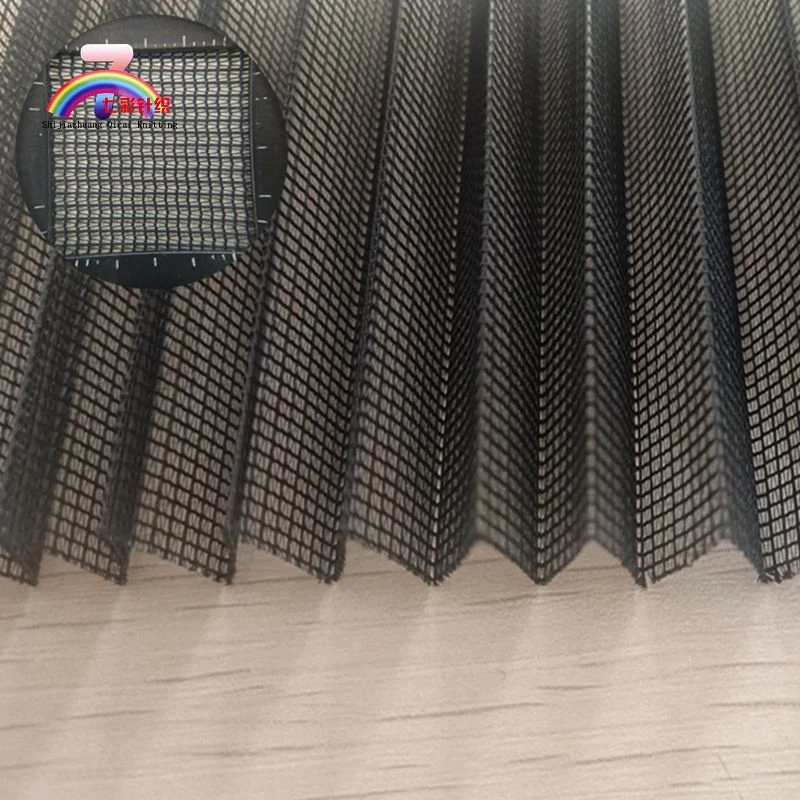
Polyester folding screen is a pleated mesh with strong economic practicality,and it possesses a balance of performance properties such as good flexibility
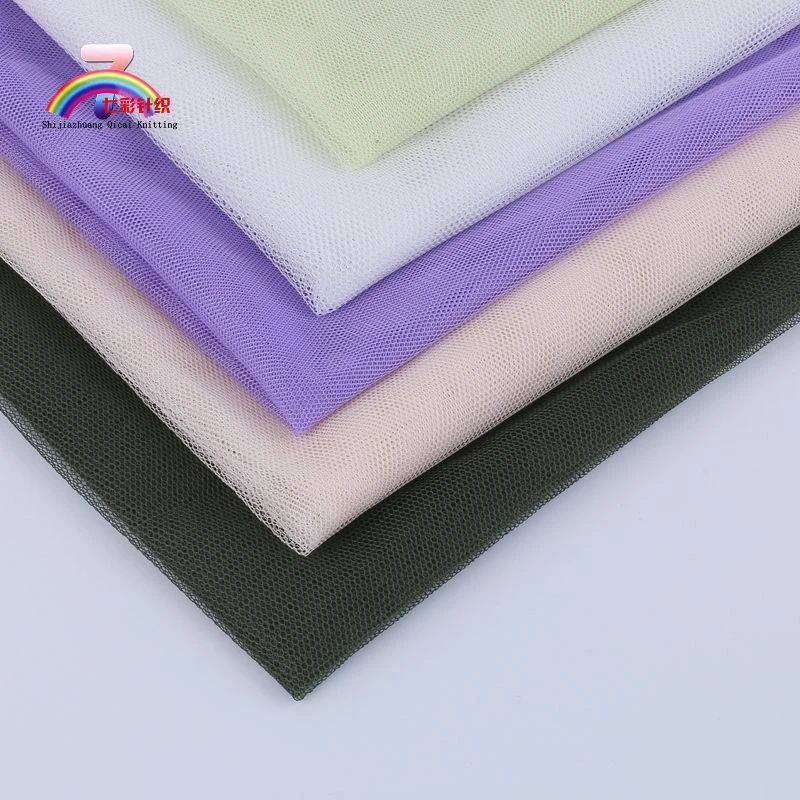
Mosquito mesh fabric can be made into dresses and all kinds of mosquito nets,it also can used for window screen.
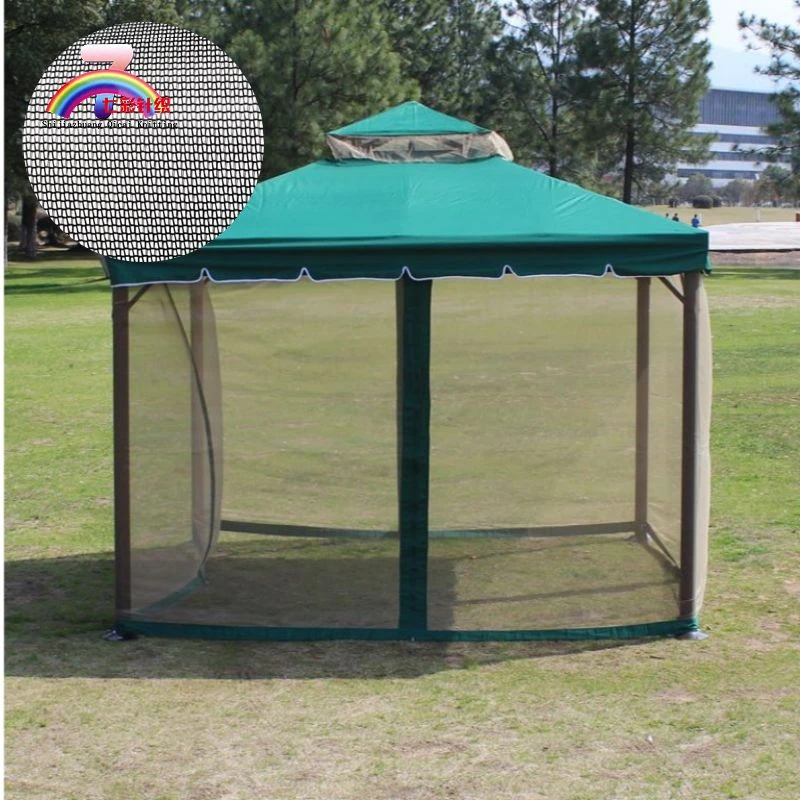
Mesh Fabric For Camping Tent-B3/B4
100%polyester B3/B4 eyelet fabric is a 100% polyester knitted fabric for Camping tent, it can help you avoid mosquito’s infestation.
Contact Us
Insights & Articles
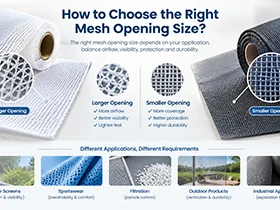
How to Choose the Right Mesh Opening Size?
Learn how to choose the right mesh opening size for airflow, visibility, protection, and different applications, including window screens and sportswear.
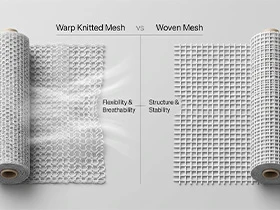
Warp Knitted Mesh vs Woven Mesh: Which Is Better?
Compare warp knitted mesh vs woven mesh by flexibility, stability, airflow, applications, and OEM requirements to choose the right fabric.
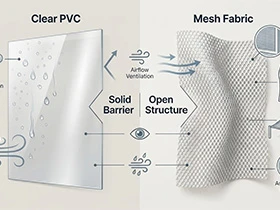
Clear PVC vs Mesh Fabric: Which Material Is Suitable for Your Application?
Compare clear PVC and mesh fabric by airflow, visibility, protection, and applications to choose the right material for your project.
What Specifications Should You Provide When Buying Mesh Fabric?
Fabric Manufacturer for Medium to Large Businesses: Supporting Scalable Textile Production
Warp vs. Weft Knitting Fabrics: Key Differences for Textile Buyers