What Specifications Should You Provide When Buying Mesh Fabric?
When buying mesh fabric for OEM, manufacturing, or bulk production, simply telling a supplier that you need “polyester mesh” is usually not enough. To receive a suitable recommendation and an accurate quotation, buyers should provide key specifications such as material, mesh opening, mesh density, GSM, width, color, fabric construction, finishing, application, and order quantity.
The more clearly these requirements are defined, the easier it is for a mesh fabric manufacturer to identify a suitable product, confirm production feasibility, and prepare a quotation.
Material should be one of the first specifications to confirm.
Common mesh fabric materials include:
Different materials can provide different combinations of strength, flexibility, durability, moisture resistance, dimensional stability, and cost.
For example, polyester mesh is widely used in applications where buyers need a combination of durability, dimensional stability, lightweight construction, and customization.
If your project already requires a specific material, include it in the RFQ.
For example:
Material: 100% polyester
If you are unsure which material is appropriate, provide the application and required performance instead. A manufacturer can then evaluate the material options based on the actual use.
Mesh opening refers to the open space between the yarns.
It affects important characteristics such as:
A larger opening generally provides more open area and airflow, while a smaller opening generally provides greater coverage and screening capability.
However, opening size should not be considered independently. Yarn diameter, material, construction, and mesh density can all affect the final fabric.
If you know the required opening, include it in your specification.
If you do not know the exact size, explain what the mesh needs to achieve.
For example:
“We need a mesh fabric for a window screen that provides good airflow while preventing small insects from passing through.”
This gives the manufacturer useful information for recommending an appropriate specification.
Mesh density is another important specification, particularly for screening and technical applications.
Buyers may encounter specifications such as:
These numbers generally describe the number of openings within a defined length in two directions.
However, mesh count alone does not completely define the fabric.
The actual opening also depends on the yarn diameter. Therefore, buyers should confirm both the mesh count and the required opening where possible.
For window screen projects, for example, mesh density can influence the balance between:
If you are uncertain about the appropriate density, provide the application and performance requirements rather than choosing a number without context.
GSM means grams per square meter and describes the weight of the fabric.
GSM can influence:
A lightweight mesh may be suitable for applications where breathability and flexibility are important, while a heavier mesh may be selected when greater coverage or durability is required.
For example, a garment mesh project may have very different GSM requirements from an outdoor or technical mesh application.
If you have a target GSM, include it in your RFQ.
If you do not, provide the intended use and required performance so the manufacturer can recommend an appropriate range.
Fabric construction can affect flexibility, stretch, dimensional stability, appearance, and application suitability.
The two broad construction categories buyers may encounter are:
Warp knitted mesh is formed through a knitting process and can provide flexibility, breathability, and a textile-like structure.
It is often considered for applications such as:
Woven mesh is produced by interlacing warp and weft yarns.
Its structured construction can be useful when dimensional stability and defined openings are important.
It may be used for:
The construction should be selected according to the application rather than simply choosing one type as universally better.
For a more detailed comparison, buyers can review our guide to warp knitted mesh vs woven mesh.
Fabric width is particularly important for roll goods and OEM production.
When requesting a quotation, specify:
For example:
Width: 1.5 m
Providing the required width early helps the manufacturer evaluate production compatibility and material utilization.
For large-volume projects, width can also affect cutting efficiency, production waste, packaging, and transportation.
For customized mesh fabric, color should be clearly specified.
Common options may include:
For OEM projects, it is better to provide a recognized color reference or physical sample when color accuracy is important.
Color requirements can be especially relevant for:
If color is flexible, state that clearly. This gives the manufacturer more options when recommending available materials.
Some applications require more than the basic mesh construction.
Depending on the product and intended use, buyers may need to discuss functional finishing or treatment requirements.
Possible requirements may relate to:
Do not simply request a finishing treatment without explaining the performance you need.
For example, instead of:
“Need UV treatment.”
A more useful requirement would be:
“The mesh will be used outdoors and exposed to sunlight for extended periods.”
This gives the manufacturer better context for evaluating the appropriate fabric solution.
The application may be the most useful specification when you do not know the exact technical requirements.
Tell the manufacturer where and how the mesh will be used.
For example:
| Application | Potential Priorities |
|---|---|
| Window screen | Insect protection, airflow, visibility |
| Sportswear | Breathability, flexibility, comfort |
| Garment lining | Lightweight construction, appearance, comfort |
| Anti-pollen screen | Fine opening, airflow, screening |
| Outdoor products | Durability, ventilation, environmental exposure |
| Industrial use | Strength, opening control, dimensional stability |
| Bags and accessories | Appearance, strength, flexibility |
This information helps the supplier connect your application with appropriate material and construction options.
Order quantity is essential for an accurate quotation.
Provide:
For example:
Quantity: 10,000 meters for the initial order
or:
Estimated annual requirement: 50,000 meters
For OEM and bulk projects, quantity can affect production planning, pricing, minimum order requirements, packaging, and delivery arrangements.
If your quantity is not finalized, provide an estimated range.
Packaging may become important when ordering mesh fabric in bulk.
Depending on the application, buyers may need to specify:
For standard industrial purchasing, roll packaging may be sufficient.
For OEM projects involving multiple colors, specifications, or production batches, clear labeling can help prevent confusion during receiving and processing.
A complete RFQ does not need to be complicated.
A practical mesh fabric inquiry can include the following:
| Specification | What to Provide |
|---|---|
| Material | Polyester, nylon, etc. |
| Construction | Knitted or woven |
| Mesh opening | Target opening or required performance |
| Mesh density | Mesh count, if known |
| GSM | Target weight or acceptable range |
| Width | Required finished width |
| Color | Standard or custom |
| Finishing | Required functional treatment |
| Application | Final product or use |
| Quantity | Meters, rolls, or estimated annual volume |
| Packaging | Roll or customized |
| Delivery | Required destination and timing |
Material: 100% polyester
Application: Window screen
Mesh: 18 × 16 or recommended alternative
Color: Black
Width: 1.5 m
GSM: Please recommend
Quantity: 10,000 m
Packaging: Standard rolls
Destination: [Country/Port]
If you do not know the exact mesh density, GSM, or opening, simply mark those specifications as “Please recommend based on application.”
This is often more useful than providing an arbitrary specification.
When comparing quotations from different suppliers, do not compare price alone.
Make sure the quoted products have comparable:
A lower price may not represent the same fabric specification.
For example, two suppliers may both quote “polyester mesh,” but one may be offering a different GSM, opening, width, or construction.
A specification-based comparison makes the purchasing decision more reliable.
For buyers who already have a complete specification, Qicai Knitting can use the provided requirements to evaluate suitable mesh fabric options for OEM and bulk production.
For buyers who do not have every specification confirmed, the application itself can provide a useful starting point.
Qicai Knitting focuses on polyester mesh fabric and supports requirements across applications such as:
When contacting Qicai, buyers can provide the material, application, target mesh opening, mesh density, GSM, width, color, finishing requirements, and estimated quantity.
If some specifications are unknown, explain the intended application and performance requirements instead. The manufacturing team can then evaluate the appropriate mesh fabric direction for the project.
For buyers looking for mesh fabric for OEM and bulk supply, providing these details at the beginning of the inquiry can help make product selection and quotation more efficient.
At minimum, provide the material, application, mesh opening or density, GSM, width, color, quantity, and any required finishing. If you do not know the technical specifications, provide the application and required performance.
There is no single specification that is most important for every application. Material, opening, density, GSM, construction, and application requirements should be considered together.
No. If the exact opening is unknown, describe the application and required performance. A suitable mesh fabric manufacturer can evaluate the specifications based on the intended use.
GSM means grams per square meter. It describes the weight of the fabric and can affect coverage, hand feel, flexibility, strength, and overall performance.
Depending on the product and manufacturing capabilities, mesh fabric can be customized by specifications such as material, mesh structure, opening, GSM, width, color, and functional finishing.
A bulk RFQ should ideally include material, construction, mesh opening, density, GSM, width, color, finishing, application, quantity, packaging, and delivery requirements.
A good mesh fabric purchase starts with a clear specification rather than a product name alone.
Before requesting a quotation, define the application first, then provide as much information as possible about material, mesh opening, density, GSM, construction, width, color, finishing, quantity, and packaging.
If some technical specifications are not yet known, do not guess. Tell the manufacturer what the mesh needs to achieve and where it will be used.
For OEM and bulk projects, a complete RFQ gives both buyer and manufacturer a clearer basis for product selection, quotation, and production planning.
If you are sourcing polyester mesh fabric for a specific application, Qicai Knitting can evaluate your requirements and discuss suitable mesh fabric options for your project.
Related products
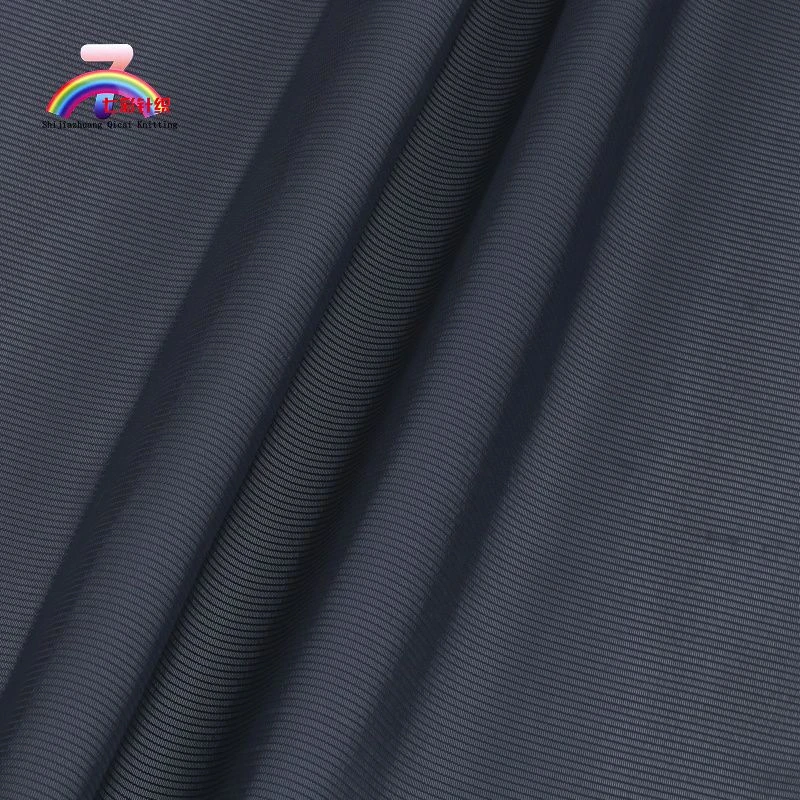
Anti-pollen Screen Mesh Fabric
Made of 100% polyester, pollen window screens are lightweight, dust-blocking window screens. the mesh is very fine and is used for window screens designed to block most airborne allergens and ultra-fine dust.
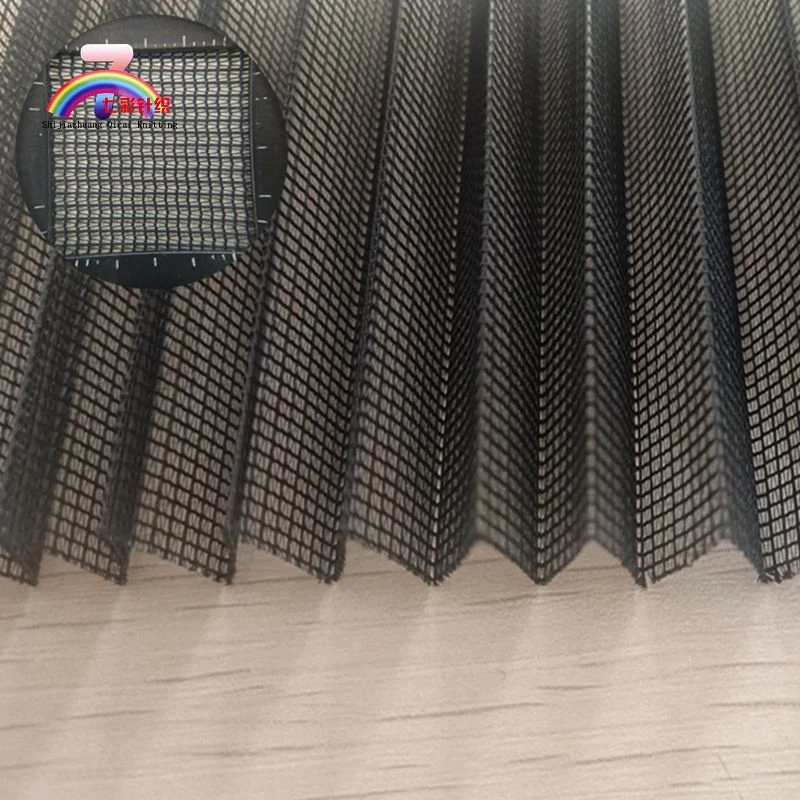
Polyester folding screen is a pleated mesh with strong economic practicality,and it possesses a balance of performance properties such as good flexibility
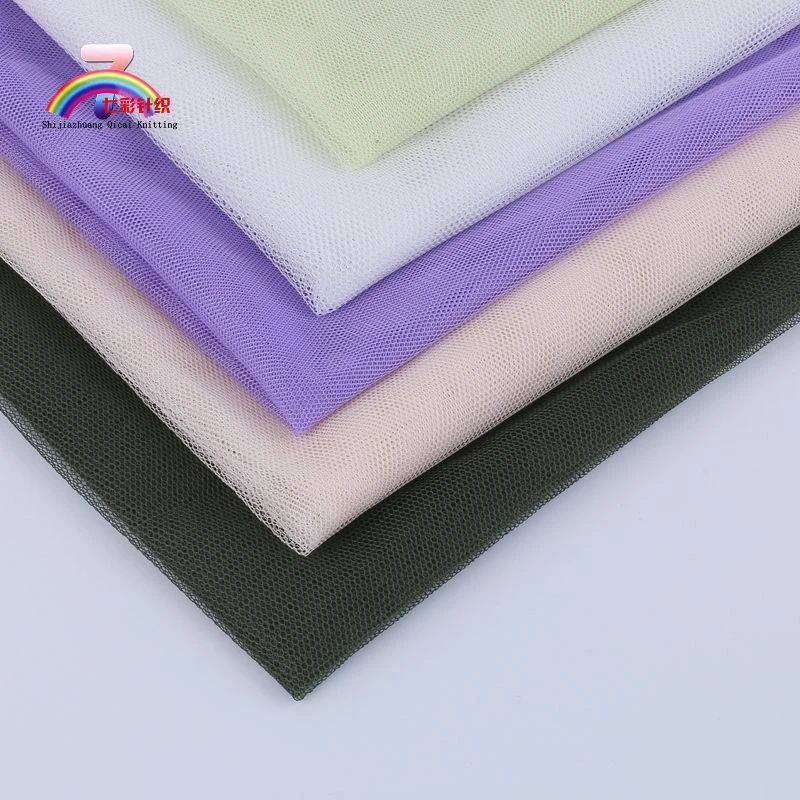
Mosquito mesh fabric can be made into dresses and all kinds of mosquito nets,it also can used for window screen.
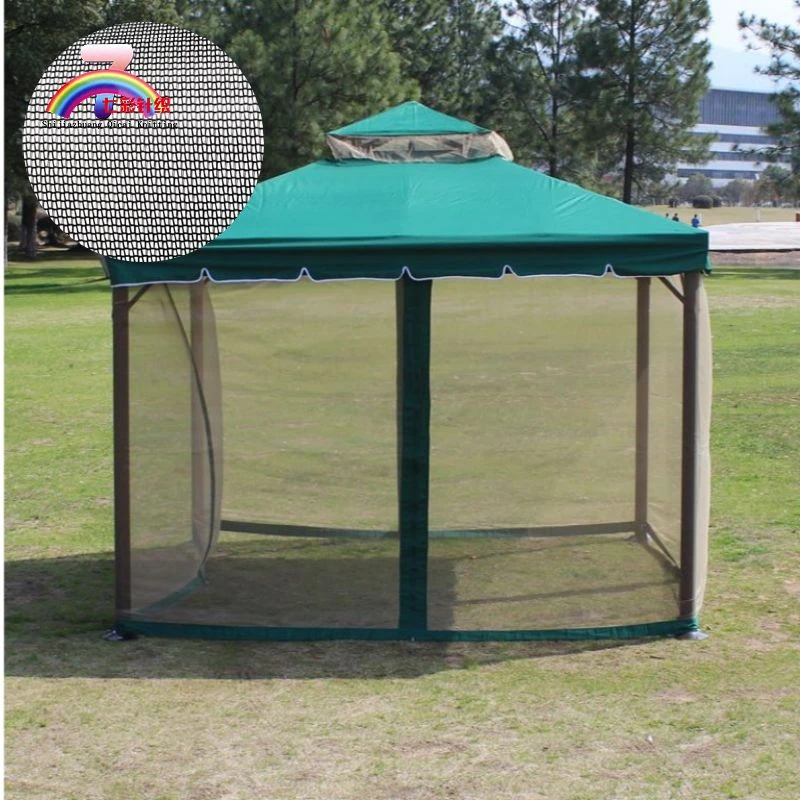
Mesh Fabric For Camping Tent-B3/B4
100%polyester B3/B4 eyelet fabric is a 100% polyester knitted fabric for Camping tent, it can help you avoid mosquito’s infestation.
Contact Us
Insights & Articles
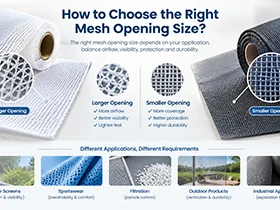
How to Choose the Right Mesh Opening Size?
Learn how to choose the right mesh opening size for airflow, visibility, protection, and different applications, including window screens and sportswear.
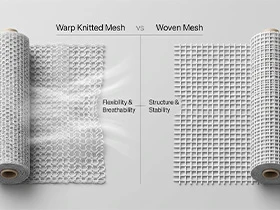
Warp Knitted Mesh vs Woven Mesh: Which Is Better?
Compare warp knitted mesh vs woven mesh by flexibility, stability, airflow, applications, and OEM requirements to choose the right fabric.
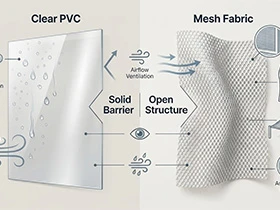
Clear PVC vs Mesh Fabric: Which Material Is Suitable for Your Application?
Compare clear PVC and mesh fabric by airflow, visibility, protection, and applications to choose the right material for your project.
Why GSM Cannot Predict Fishing Net Strength
Fabric Manufacturer for Medium to Large Businesses: Supporting Scalable Textile Production
Warp vs. Weft Knitting Fabrics: Key Differences for Textile Buyers


